


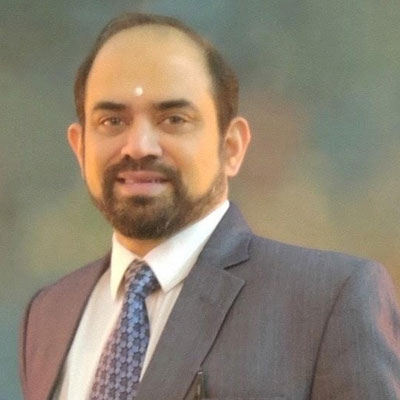
The Rise of the Multi-Skilled Professional: Redefining Success in the Future Workforce | Dr. Ramakrishnan Raman | Vice Chancellor | Symbiosis International (Deemed) University
 The nature of work is undergoing a profound transformation. Rapid technological advances, digital disruption, globalization, and evolving industry needs are reshaping the skills required for professional success. In this environment, the traditional model of building a career around a single area of expertise is giving way to a new paradigm: the rise of the multi-skilled professional.
For decades, educational systems and career pathways encouraged specialization. Engineers became engineers, accountants became accountants, and lawyers focused exclusively on legal practice. While deep expertise remains essential, the complexity of modern challenges increasingly demands professionals who can operate across disciplines, integrate diverse perspectives, and adapt to continuous change.
Today, organizations seek individuals who combine domain expertise with complementary skills. An engineer who understands business strategy, a manager who is comfortable with data analytics, a healthcare professional familiar with artificial intelligence, or a public policy expert who understands technology can create greater value than those confined within traditional disciplinary boundaries.
This shift is driven by the realities of the modern workplace. Digital technologies are influencing every sector, from manufacturing and finance to healthcare and education. Artificial intelligence, automation, cybersecurity, sustainability, and data-driven decision-making have become central to organizational success. As a result, professionals are expected not only to possess technical competence but also to demonstrate communication skills, critical thinking, ethical judgment, creativity, and collaborative leadership.
Educational institutions therefore face an important responsibility. Universities can no longer operate within rigid academic silos. Engineering students benefit from exposure to economics, public policy, communication, and management. Likewise, students of business, humanities, law, and social sciences increasingly require an understanding of digital technologies, analytics, and innovation ecosystems. Such interdisciplinary learning equips graduates to address complex real-world problems that rarely fit neatly within a single discipline.
However, the emphasis on multidisciplinarity should not be misunderstood as a rejection of specialization. The future belongs neither to narrow specialists nor to superficial generalists. Rather, it favors professionals who possess deep expertise in at least one domain while developing sufficient breadth across related disciplines. This combination of depth and versatility enables individuals to collaborate effectively, innovate creatively, and adapt confidently to emerging opportunities.
Industry leaders increasingly recognize the value of such talent. Organizations seek employees who can bridge departments, communicate across functions, and contribute to strategic decision-making beyond their immediate roles. In an era where innovation often occurs at the intersection of disciplines, the ability to connect ideas from different fields has become a significant competitive advantage.
For India, this transformation presents both an opportunity and a challenge. With one of the world’s largest youth populations, the country enjoys a significant demographic advantage. Yet demographic strength alone cannot guarantee economic leadership. It must be supported by an education ecosystem that nurtures curiosity, adaptability, problem-solving, entrepreneurship, and lifelong learning. Graduates must be prepared not merely for today’s jobs but also for professions that may not yet exist.
The concept of lifelong learning is therefore becoming central to career development. As industries evolve and technologies advance, professionals must continually update their knowledge and acquire new competencies. Learning can no longer end with a university degree; it must become an ongoing process throughout one’s professional life.
The rise of the multi-skilled professional is not a temporary trend but a defining feature of the twenty-first-century workforce. Success in the years ahead will depend on an individual’s ability to combine expertise with adaptability, technical literacy with human skills, and specialized knowledge with interdisciplinary understanding.
The careers of tomorrow will belong to those who can learn continuously, think broadly, work collaboratively, and lead confidently in a world characterized by constant change. For educational institutions, employers, and policymakers alike, fostering such talent must become a strategic priority if nations are to thrive in an increasingly interconnected and knowledge-driven global economy.