



Building people-first cultures that support business growth | Divya Mohan | CHRO | InsuranceDekho
When a business is growing, employees are often asked to take on responsibilities that did not exist when they joined. Some welcome the challenge, while others need guidance or time to learn. How leaders handle this period has a bearing on both employee confidence and the organisation’s ability to deliver on its plans.
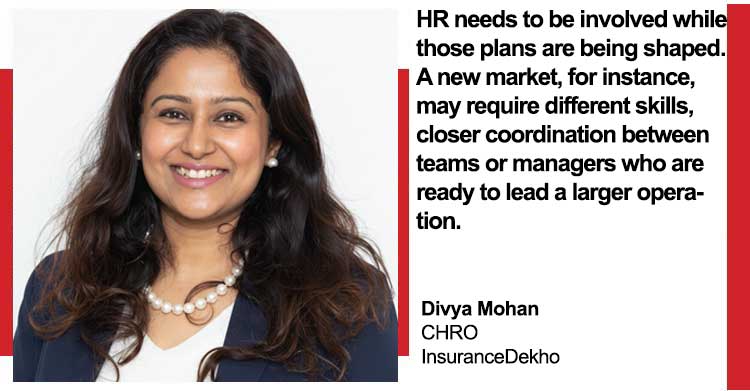
HR needs to be involved while those plans are being shaped. A new market, for instance, may require different skills, closer coordination between teams or managers who are ready to lead a larger operation. Understanding these requirements helps HR decide where to hire and where existing employees can be developed. If survey responses suggest that workloads are uneven, managers need to review how assignments are distributed and explain any changes to the team.
When an employee says a deadline is difficult to meet, the manager needs to understand what is holding up the work. There may be little scope to change the date, but reviewing priorities or arranging additional support can make the assignment more manageable without leaving the employee to resolve the difficulty alone. Employees need to see that speaking up serves a purpose.
Ownership also requires clarity about decisions. Asking someone to be accountable for a customer issue makes little sense if every response needs several approvals. Leaders should agree which decisions employees can take themselves and where support is needed. This gives teams room to respond quickly and allows managers to focus their attention where it is most needed.
Employees can broaden their experience by moving between operations and sales, or contributing to learning and development. Such movement brings practical knowledge of one function into another, helping colleagues understand the pressures behind each other’s decisions. It also makes learning relevant to an employee’s career. Managers have a responsibility to create time for that preparation, and employees need to invest effort in becoming ready for new responsibilities.
Collaboration needs similar attention. When a customer’s request passes between departments, employees should know who will follow it through to resolution. Discussing these cases together can reveal where information is lost or work is duplicated. In insurance, helping someone understand their cover gives everyday work a purpose that employees can recognise in the customer conversations they handle.
High standards belong in this culture. Employees should have a clear understanding of their responsibilities and enough opportunity to discuss difficulties before these affect their work. Managers, meanwhile, need to notice when the same reliable people are carrying an increasing share of the workload. If a team keeps losing capable colleagues despite meeting its targets, HR has a responsibility to examine why and agree with the manager on the changes that are needed.
HR should look for evidence of progress in service quality, readiness for greater responsibility and the way teams respond when priorities change. A people-first culture takes sustained management attention, particularly during periods of pressure. As the business grows, leaders need to keep examining whether the way work is organised still allows people to do it well.