



Gen Z Isn’t Changing Work. They’re Revealing What Great Workplaces Have Always Needed | Tanvi Lal | Head of People | AppsForBharat
Conversations around Gen Z in the workplace often frame the generation as a challenge to manage. Yet the more meaningful question isn’t how organisations should adapt to Gen Z but it’s what Gen Z is revealing about the modern workplace.
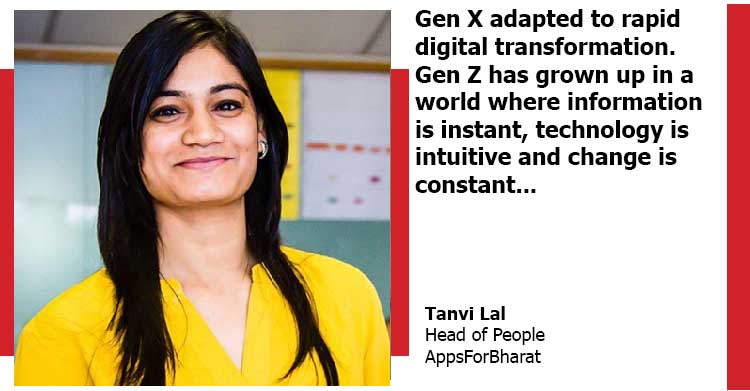
Every generation enters the workforce shaped by the world it grows up in. Millennials witnessed the internet become mainstream. Gen X adapted to rapid digital transformation. Gen Z has grown up in a world where information is instant, technology is intuitive and change is constant. Naturally, they bring different expectations to work. Rather than viewing these expectations as disruptive, organisations have an opportunity to see them as a catalyst for building stronger workplaces.
The real question isn’t, What does Gen Z want? It is, what kind of workplace enables people to do their best work? Organisations that consistently attract and retain exceptional talent are rarely those that have mastered the art of managing a particular generation. They are the ones that have built cultures rooted in trust, learning and transparency.
Context creates ownership
One noticeable shift is the growing expectation that employees understand the reasoning behind decisions, not just the decisions themselves. Curiosity is often mistaken for questioning authority, but informed employees tend to make better decisions, take greater ownership and contribute more meaningfully. When people understand business priorities, customer challenges and organisational goals, they become active participants in the organisation’s success rather than passive executors of tasks. The strongest organisations don’t guard context instead they share it.
Growth thrives on continuous conversations
Career growth is no longer defined solely by promotions or new titles. Employees increasingly measure progress through opportunities to solve complex problems, develop new capabilities and take on meaningful responsibility. Just as importantly, they expect regular feedback that helps them improve along the way.
The pace of work has made annual performance reviews insufficient on their own. High-performing teams are built by managers who coach consistently, recognise good work in real time and address challenges before they become larger issues. When learning, feedback and development become part of everyday leadership and not isolated HR processes as employees are far more likely to stay engaged and continue growing.
Employee experience is a product experience
Technology has fundamentally changed expectations of work. Employees interact with intuitive digital products every day and increasingly expect the same simplicity from workplace systems. Whether someone is applying for a role, completing onboarding or navigating performance reviews, every interaction shapes how they experience the organisation. HR is no longer only designing policies but it is designing experiences. Removing friction from everyday processes allows employees to spend more time creating value and less time navigating complexity.
Authenticity builds trust
The relationship between employers and employees has become significantly more transparent. Candidates today have access to employee reviews, leadership communication and first-hand experiences long before they apply for a role. As a result, employer branding can no longer rely on polished messaging alone. Organisations that communicate honestly, remain consistent in their actions and demonstrate their values through everyday decisions build trust that no marketing campaign can replicate.
Building workplaces that work for everyone
One of the biggest misconceptions about Gen Z is that they require an entirely new management philosophy. In reality, many of the things they value meaningful work, opportunities to learn, supportive managers, transparent leadership and cultures built on trust are qualities every generation has sought. The difference is that Gen Z expects them from the outset and is more willing to choose workplaces that deliver on those expectations.
Framing the discussion around “managing Gen Z” is, in many ways, limiting. It assumes organisations need a new playbook for one generation, when the real opportunity lies in building better workplaces for everyone. Organisations that invest in trust, transparency, meaningful growth and employee experience are unlikely to succeed with Gen Z alone as they are more likely to create environments where every generation can thrive.
If there is one lesson organisations can take from the Gen Z conversation, it is this: the future of work isn’t about adapting to one generation’s expectations. It is about building workplaces that are more human, more transparent and better equipped for the realities of modern work.