


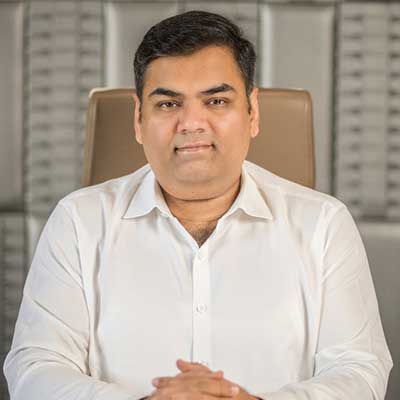
The Future-Ready University: AI, Skills, Employability & Industry Collaboration | Dr Somnath P Patil | Pro-Chancellor | Dnyaan Prasad Global University (DPGU)
 Higher education is going through one of the biggest shifts in its history. Artificial intelligence, automation, and fast-changing job requirements are forcing universities to rethink how they teach, what they teach, and how closely they work with industry. At Dnyaan Prasad Global University (DPGU), by Dr. D. Y. Patil Group, Pune, this is a subject we think about seriously, because our responsibility is not just to hand out degrees but to prepare young people who can actually thrive in the world of work.
Let me share some thoughts on where higher education is headed, and what institutions like ours need to do differently.
AI is not a subject anymore, it is a skill everyone needs
A few years back, artificial intelligence was something only computer science or engineering students studied. That is no longer true. Today, whether a student is doing commerce, law, management, media, or the sciences, they will end up using AI tools in their daily work. A marketing student needs to understand AI-driven analytics. A law student needs to know how AI is changing legal research. Even a student of literature will find AI tools useful for translation, editing, and research.
This means AI exposure cannot stay locked inside one department. We believe every stream of study should carry some basic understanding of how AI works, its uses, and importantly, its limitations. Students should know when to trust a tool and when to think for themselves. That balance is something classrooms need to teach directly, not leave to chance.
Skills matter as much as marks
For a long time, our education system has measured students mainly through exams and marks. But employers today are asking a different question: can this person actually do the job? Communication, problem-solving, teamwork, adaptability, and basic digital skills often matter as much as subject knowledge.
This is why practical, hands-on learning needs a much bigger place in university life. Projects, internships, case studies, and real problem-solving exercises help students build confidence that no textbook can give them. A student who has worked on a live project, even a small one, understands the working world in a way that pure classroom learning cannot teach.
Employability starts years before placement season
One mistake many institutions make is treating employability as something to worry about only in the final year. In reality, career readiness has to be built slowly, starting from the first year itself. Basic communication training, exposure to different industries, soft skills workshops, and small internships should begin early, so that by the time a student reaches their final year, they are not learning these things for the first time but sharpening what they already know.
Career guidance also needs to be personal. Not every student wants the same kind of job or has the same strengths. Universities need to spend time understanding individual students rather than pushing everyone toward the same placement targets.
Working closely with industry is not optional anymore
No university can prepare students for the job market alone. Industry needs to be part of the process, not just at the hiring stage but throughout the learning journey. Guest lectures from working professionals, live projects with companies, and feedback from industry on what skills are missing in graduates all make a real difference.
We see industry partnerships as a two-way conversation. Companies tell us what they need, and we adjust how we teach. This kind of honest, ongoing dialogue is far more useful than a one-time placement drive at the end of a course.
The way forward
Building a future-ready university is not about adding a few AI classes or signing a few company tie-ups. It requires a change in mindset – treating skills, technology awareness, and industry connection as part of everyday learning, not as add-ons.
We remain committed to this ongoing effort, knowing well that preparing students for tomorrow is a continuous responsibility, not a one-time task.