


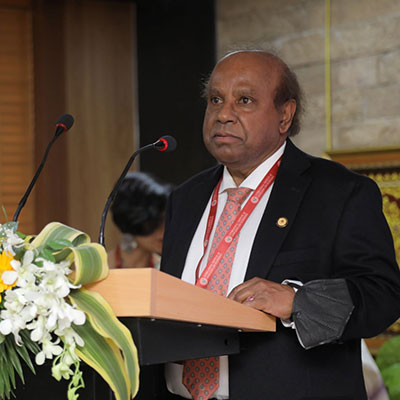
Medical Colleges as Catalysts for Community Health and Preventive Care | Dr Pradip Kumar Ghosh, CEO & Chairman, PKG group of Institutions
 Healthcare leadership is often judged by what happens inside an institution’s walls — bed capacity, specialist rosters, surgical outcomes, research output. Yet a medical college is never truly separate from the community that surrounds it. It sits among villages, urban neighbourhoods, and families who often reach a doctor only once a condition has already become serious. Leading such an institution means recognizing that its resources — clinical, human, and financial — carry a responsibility that extends well beyond the hospital gates. A medical college cannot only be a place that treats illness. It has the standing, and the obligation, to help prevent it.
Why the Gap Exists
Across much of India, healthcare delivery remains organized in tiers — primary centres, secondary hospitals, and tertiary institutions such as medical colleges — with the heaviest concentration of trained personnel and diagnostic capability sitting at the top of that structure. Community-level health worker programmes, while valuable, often depend on informal or volunteer networks that vary widely in training and consistency from one region to the next. The result is a persistent gap between where clinical expertise is concentrated and where preventive care is most needed. That gap is not a policy footnote. It is a leadership challenge sitting directly next to the training and workforce infrastructure a medical college already controls.
Why Medical Colleges Are the Right Institutions to Close It
Medical colleges hold advantages that a fragmented public health system chronically lacks: trained clinicians, functioning diagnostic infrastructure, active research capacity, and — crucially — a physical presence already embedded in the community. The leadership question worth asking is not “how many beds do we operate?” but “how much illness are we preventing, and how many lives are we improving, before a patient ever reaches our wards?”
Answering that question well requires deliberate institutional design, not goodwill alone. It means treating community engagement as a standing function of the institution — with defined roles, ongoing funding, and regular review — rather than as an occasional gesture layered on top of clinical operations.
What Institutional Leadership Can Do
A handful of structural choices distinguish medical colleges that meaningfully shift community health outcomes from those that do not:
Build community exposure into the curriculum itself. When medical students rotate through community and preventive care settings as a core part of their training — not as an isolated elective late in the programme — they develop the habit of thinking in terms of populations and risk factors, not only individual patients in front of them. That habit shapes the physicians an institution produces for decades afterward.
Redirect a portion of research capacity toward the institution’s own region. Faculty research is often measured purely by publication output. When even part of that capacity is aimed at understanding local disease patterns, nutrition gaps, or maternal and child health trends in the surrounding district, the medical college begins to function as an early warning system for its own community, not just a site of academic output.
Design outreach as permanent infrastructure, not periodic activity. A single health camp generates short-term goodwill. A standing structure — regular screening schedules, defined follow-up protocols, and clear accountability for outcomes — produces change that compounds over years rather than resetting after each event.
Partner with existing government health systems rather than duplicating them. Institutions achieve more when their outreach strengthens primary health centres, community health worker networks, and immunization programmes already in place, extending their technical capacity rather than running a parallel system alongside them.
The Leadership Lesson
The instinct to treat “running a medical college” and “community health work” as separate mandates is precisely the instinct institutional leaders need to abandon. Preventive and community-facing work is not a departure from a medical college’s core purpose — it is an extension of it, carried out at the population level rather than the individual one. Institutions that build this thinking into curriculum design, research priorities, and standing operational structure do not just serve their community better. They shape a generation of physicians who see prevention as central to medicine rather than peripheral to it.
The Broader Responsibility
Leading a medical college carries an obligation that goes beyond producing competent clinicians. These institutions are, in effect, custodians of public health capacity for the regions they serve — regions where government healthcare reach can be thin and private care can be out of financial reach for many families. Recognizing that responsibility, and building institutional structures to meet it, is not a matter of charity. It is a matter of leadership — deciding, deliberately, that a medical college’s impact should be measured not only by the patients it treats, but by the illness it helps prevent in the community it calls home.