



Beyond Recruitment: How Technology is Redefining Workforce Management in India | R P Yadav | Chairman | Genius HRTech Limited
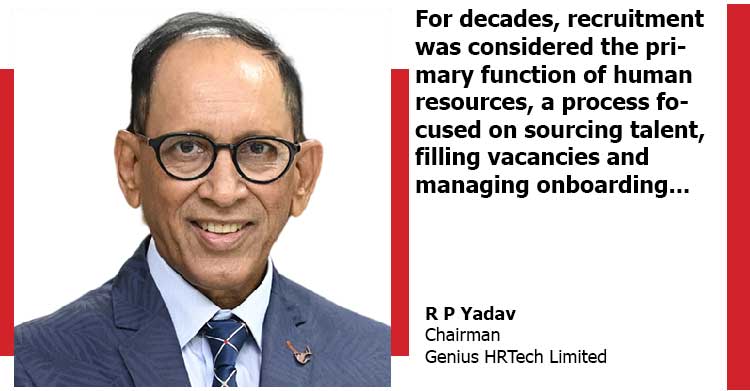
For decades, recruitment was considered the primary function of human resources, a process focused on sourcing talent, filling vacancies and managing onboarding. Today, that perspective is rapidly changing. As businesses navigate digital transformation, evolving employee expectations and increasing competition for skilled talent, workforce management has become a strategic business function powered by technology, data and intelligent automation.
The modern workplace is no longer defined solely by hiring the right people. Organizations are now expected to manage the entire employee lifecycle efficiently, from recruitment and payroll to compliance, performance management, learning and employee engagement. Technology is at the heart of this transformation, enabling businesses to build agile, data driven and future ready workforces.
The Shift from Human Resources to Human Capital Strategy
Organizations are increasingly viewing employees as strategic assets rather than operational resources. This shift has expanded the role of HR from administrative support to business enablement, requiring HR leaders to make decisions backed by real-time insights and predictive analytics.
Technology has made this transition possible by eliminating repetitive manual tasks and allowing HR teams to focus on strategic initiatives such as talent development, workforce planning and organizational culture.
Instead of simply filling vacancies, workforce management today revolves around ensuring that organizations have the right skills, the right capabilities and the flexibility to adapt to changing business needs.
AI is Transforming the Talent Lifecycle
Artificial Intelligence has become one of the most influential technologies shaping workforce management. While AI initially gained attention for its role in resume screening and candidate matching, its applications now extend across the entire employee journey.
AI-powered platforms are helping organizations identify skill gaps, recommend learning paths, forecast workforce requirements and improve employee engagement through personalized experiences.
Recruiters can process thousands of applications within minutes, reducing hiring timelines while improving candidate matching. HR teams can automate onboarding workflows, answer employee queries through intelligent virtual assistants and generate insights that previously required weeks of manual analysis.
Rather than replacing HR professionals, AI is augmenting their capabilities, allowing them to spend more time on relationship building, leadership development and strategic planning.
HRMS Platforms Are Becoming Business Intelligence Tools
Human Resource Management Systems (HRMS) have evolved far beyond digital employee databases. Modern platforms integrate attendance, leave management, payroll, performance reviews, compliance tracking and employee engagement into a single ecosystem.
This integration enables organizations to make informed decisions using centralized workforce data.
Leadership teams can analyze attrition trends, monitor productivity, evaluate hiring effectiveness and forecast future workforce requirements through dashboards that provide real-time visibility across the organization.
The ability to connect people data with business outcomes is transforming HR from a support function into a strategic contributor to organizational growth.
Payroll Digitization is Driving Accuracy and Compliance
Payroll has traditionally been one of the most complex and time-consuming HR processes, particularly for organizations operating across multiple states with varying statutory requirements.
Digitized payroll systems are simplifying salary processing, tax calculations, statutory deductions and compliance reporting while significantly reducing the risk of manual errors.
Automated payroll solutions also improve employee experience by ensuring timely salary disbursements, transparent payslips and self-service access to tax documents and benefits information.
As regulatory frameworks continue to evolve, organizations are increasingly relying on technology to ensure compliance while reducing administrative overhead.
Workforce Analytics is Enabling Smarter Decisions
One of the biggest advantages of digital workforce management is the ability to convert employee data into actionable insights.
Organizations are no longer relying solely on intuition when making hiring or retention decisions. Workforce analytics enables leaders to identify emerging skill shortages, understand productivity patterns, predict attrition risks and optimize resource allocation.
For example, predictive analytics can help organizations identify employees who may be at risk of leaving based on engagement patterns, workload trends or career progression indicators, allowing HR teams to intervene proactively.
Similarly, hiring data can reveal which recruitment channels produce the highest-performing employees, enabling companies to allocate budgets more effectively.
This data-driven approach is improving both operational efficiency and long-term workforce planning.
Employee Experience Has Become a Business Priority
Technology is also reshaping how employees interact with their organizations.
Self-service portals, mobile HR applications, AI-powered chatbots and digital learning platforms have created a more connected and responsive workplace experience. Employees today expect instant access to leave applications, payroll information, performance feedback and learning opportunities through intuitive digital interfaces.
Organizations that invest in employee experience are increasingly seeing improvements in engagement, productivity and retention.
At the same time, technology is enabling more personalized career development by recommending learning programs, mentoring opportunities and internal career pathways aligned with individual aspirations and organizational needs.
The Human Element Remains Critical
Despite rapid technological advancement, workforce management continues to be fundamentally about people.
Automation can streamline processes and improve efficiency, but leadership, empathy, communication and ethical decision-making remain irreplaceable human capabilities.
Organizations that achieve the best outcomes are those that combine intelligent technology with inclusive leadership and transparent people practices. Human oversight remains essential, particularly in areas such as hiring decisions, performance evaluations and employee development, where fairness and context are critical.
Technology should empower HR professionals rather than replace their judgment.
Preparing for the Future of Work
India’s workforce is entering an era defined by continuous change. Hybrid work models, AI adoption, evolving regulatory requirements and shifting employee expectations will continue to reshape how organizations attract, manage and retain talent.
Success will increasingly depend on building integrated workforce ecosystems where recruitment, payroll, compliance, employee engagement and analytics work together rather than as isolated functions.
Organizations that embrace technology as a strategic enabler, not merely an operational tool, will be better positioned to respond to market changes, develop resilient talent pipelines and create workplaces that support both business growth and employee wellbeing.
The future of workforce management extends far beyond recruitment. It is about creating intelligent, agile and people-centric organizations where technology enhances efficiency, data informs decisions and human potential remains the most valuable asset. In this evolving landscape, businesses that successfully balance innovation with empathy will define the next chapter of work in India.