


“Always Available”: The Psychological Paradox of Being Connected but Never Disconnected | Shrestha | Asstt. Editor | The People Management
It’s 11:47 p.m.
The phone illuminates.
Before you even look, you already know what it is.
A notification at work.
You pause for a moment. Do I need to check it?
Yes, you do.
The message can be read in just thirty seconds. Perhaps you don’t even answer. After putting the phone away, you go back to your evening.
However, something has altered.
You are no longer fully present in your mind.
You start to question if you should answer. You consider the meeting tomorrow. You recall an incomplete task. You speculate about what your supervisor might say. You look at your phone once more.
The distance to the office is hundreds of kilometres.
So why does it feel like you’re still there?
The psychological paradox of the modern workplace is that while technology has made it easier to access work, it has also made it more difficult to get away from it.
It’s not always bad to stay connected after work. The issue arises when employees feel that they must be mentally available even when they are not physically working, and when connectivity is expected.
Psychological detachment is a crucial hint provided by psychology.
Putting your laptop away is only one aspect of detachment. It entails taking a mental break from work, putting an end to the mental replay of discussions, incomplete assignments, due dates, and workplace issues.
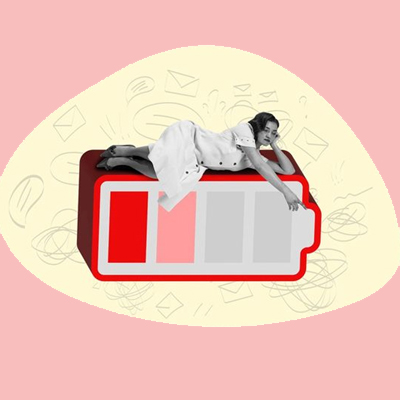
Recovery becomes more challenging when that psychological barrier keeps vanishing. Work may still be present in even seemingly “free” moments. This continual mental availability can eventually lead to burnout, diminished wellbeing, and exhaustion.
Maybe this is why it can be challenging to identify burnout in its early stages.
There might not be a significant breakdown.
Just one more alert.
Another brief inspection.
Another evening when a place that was meant to be yours is subtly invaded by work.
Therefore, perhaps the question that contemporary organizations should ask is not just:
“Are our workers productive?”
It is:
“Are our workers able to turn off?”
Because sometimes the work itself is not the most taxing aspect of the job.
It is never really moving on from it…