


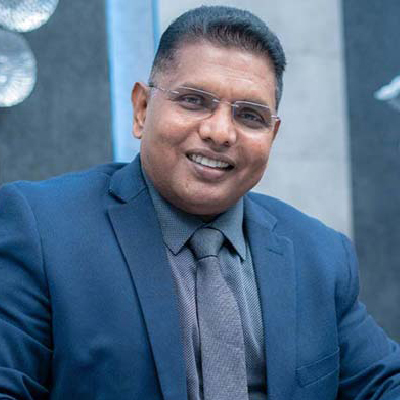
Universities are embracing AI: Will Students get smarter or stop thinking? | Dr. David Pillai CEO and Founding Chairman | Transworld Educare
 Artificial Intelligence (AI) has swept through higher education system at an unprecedented pace. What began as an academic experiment has become a mainstream reality; reshaping classrooms, examinations, and student behaviour. A 2025 EY–Parthenon and FICCI survey of 30 leading higher-education institutions revealed that over 60% of Indian universities now permit students to use AI tools, while more than half are using generative AI to design learning material.
These numbers reflect enthusiasm, but they also raise a fundamental concern. Is AI making students better thinkers or passive consumers of pre-packaged intelligence? Will the ease of obtaining answers replace the struggle that once built understanding? As India’s education system serves more than 40 million students, these questions cannot be ignored.
The Evolving Role of AI in Higher Education
Across India, universities are racing to integrate AI into every corner of academia. The same report shows 40% of institutions use AI-powered tutoring systems, 39% rely on adaptive learning platforms, and 38% use AI for automated grading. On paper, this seems revolutionary. But what happens when students no longer read deeply, analyse independently, or engage in trial and error, because an algorithm already predicts what they should learn next?
In medicine, physiotherapy, and nursing, the overdependence on AI tools can be dangerous. AI can simulate a diagnosis or predict treatment outcomes, but it cannot interpret emotion, assess patient psychology, or weigh ethical dilemmas. If students rely on machines to think for them today, will they have the judgement to make life-saving decisions tomorrow?
Opportunities or Overreliance?
AI offers undeniable efficiencies, speed, precision, and convenience, but education is not meant to be efficient; it is meant to be transformative. The danger lies in the illusion of mastery. Students can now generate essays, summaries, and project reports within seconds. But producing content is not the same as producing thought.
A Complete AI Training report (2025) notes that while 56% of Indian HEIs have policies to govern AI use, most lack structured faculty training or digital ethics frameworks. Without proper guardrails, AI risks encouraging intellectual shortcuts. The more students depend on prompts, the less they develop persistence, problem-solving, and creativity, the very traits that education is meant to strengthen.
Enhancing, Not Replacing, Human Intelligence
AI is exceptional at processing information, but it cannot replicate distinctly human faculties like empathy, moral reasoning, or creativity. In healthcare education, for instance, AI can suggest a diagnosis, but it cannot comfort a patient or navigate human complexity.
Education, at its core, is about forming judgement through reflection. Technology should serve as an aid to human reasoning, not its replacement. When students use AI to avoid thinking, they gain efficiency but lose depth. AI-enabled test preparation tools can enhance accuracy, but students who rely on them excessively often struggle with critical application during exams or clinical practice. Machines can inform; only humans can truly understand.
Problem-Solving in the AI Era
A 2025 analysis of Indian computing curricula revealed that only 2.2% of syllabi meaningfully address AI ethics or critical reflection. This show how unprepared we are for the moral and intellectual consequences of AI-driven learning. When algorithms perform everything—from crafting answers to conducting experiments, students may lose the ability to engage with complexity and embrace the struggle that lies at the heart of true learning.
The essence of problem-solving lies in uncertainty, iteration, and failure, elements AI conveniently removes. It is essential to prioritise hands-on learning, peer collaboration, and critical discussions, for true understanding is cultivated through perseverance and exploration, not through shortcuts.
The Way Forward
India’s higher education system must pause and ask whether AI is helping students think, or merely helping them finish tasks faster. For a country with one of the world’s youngest populations, the goal cannot be to produce graduates who are quick but shallow. AI can be a valuable assistant, but it must never become the author of a student’s thought process. The future of learning depends not on how advanced our algorithms are, but on how determined we remain to protect the human mind from atrophy in the age of automation.