


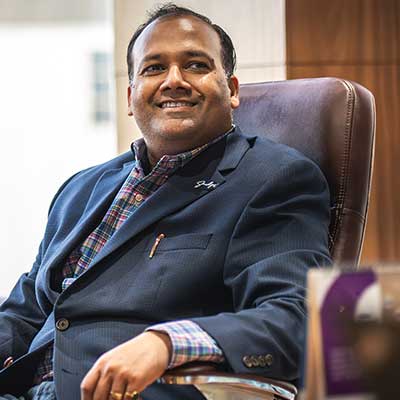
The Future of Work Is Tech-Led: Why IT Leaders Must Think Like Business Leaders in 2026 | Abhishek Agarwal | President – Judge India & Global Delivery | The Judge Group- a leading IT solutions company
 A few years ago, technology leadership was defined by stability. Systems needed to run. Networks needed to be secure. If nothing broke, the job was considered done. But in 2026, that definition no longer holds the ground.
In 2026, technology will no longer merely supports the business in the background. It is shaping how organisations hire, serve customers, price products, and even decide on new market opportunities. The question for IT leaders is no longer how well systems are managed, but how well technology decisions align with business reality.
This shift has been gradual, but unmistakable. Most organisations today are running on digital foundations likecloud platforms, data systems, artificial intelligence-driven tools, and integrated workflows. Yet many still treat technology as a separate function, consulting it after strategic decisions have already been made. That gap is where operational friction begins.
The most effective IT leaders today are those who have stepped out of the technology silo. They understand commercial pressures, customer expectations, and operational constraints. They don’t discuss first about tools or platforms. They discuss outcomes — speed, resilience, growth, and risk.
Data as a decision engine
Data is a good example. Almost every organisation claims to be data-driven, but far fewer actually are. The difference lies not in dashboards, but in interpretation. IT leaders who work closely with business teams help turn raw data into insightful decisions such aswhich customers are drifting away, which processes slow teams down, and where inefficiencies quietly add cost. This is no longer a technical exercise; it is a business necessity.
Agility and 2026’s Unpredictability
The same applies to agility. In 2026, markets do not move in predictable cycles. Regulations change quickly. Customer behaviour shifts without warning. Organisations that respond well are not necessarily the most technologically advanced but they are the ones where IT leadership enables fast, informed decisions. That requires adaptability comfort with change, clarity on priorities, and the willingness to adapt without waiting for perfect
information.
Reality Check of Talent
Talent presents another reality check. Hiring skilled professionals remains difficult, but retention and relevance are one of the major challenges. Technology leaders who focus only on recruitment miss the point. The real work lies in building teams that keep learning, a teams that understand not just how systems work, but why the business needs them too. This requires breaking down long-standing barriers between “tech” and “non-tech” roles.
Risks: A Business Crisis
Risk, too, has changed shape. Cybersecurity incidents are no longer isolated technical failures; they are business crises. Downtime affects revenue. Data breaches affect trust. Regulatory lapses affect reputation. IT leaders who understand this broader impact approach risk differently, balancing innovation with responsibility, speed with safeguards.
The Way Forward
What often gets overlooked in conversations about the future of work is judgment. Technology can recommend, automate and optimise, but it cannot replace context. Leaders still need to weigh trade-offs, understand people and make decisions that technology alone cannot make. This is where business thinking matters most.
At Judge India Solutions, these patterns are visible across sectors. Organisations that treat technology leadership as business leadership move faster and adapt better. Those that separate the two struggle – not because their tools are inadequate, but because alignment is missing.
Looking ahead, the role of the IT leader will continue to expand. Not in authority, but in influence. Being invited into early strategic discussions will matter more than managing larger teams or bigger budgets. The ability to ask the right questions will matter more than having all the answers.
The future of work is undeniably tech-led. But it will be shaped by leaders who understand that technology is not the destination, but business clarity is.