


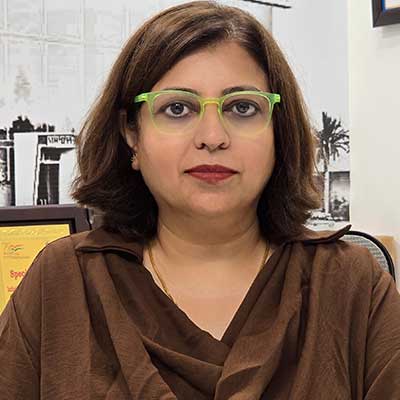
The Changing Role of HR: From People Management to Business Transformation, Attributed | Sonal Pathak | CHRO | Ahuja Residences
 The role of HR is becoming simpler in its purpose, even as it becomes wider in responsibility. We must help the business grow while ensuring that people are heard, respected and enabled to contribute.
The HR leader of the future will not be measured only by the efficiency of the HR function. The true measure will be an organisation’s ability to scale, adapt, build capable leaders and retain the trust of its people. That is when HR moves from supporting the business to helping build and transform it.
From Process Owner to Business Partner
For many years, HR was largely seen as the function responsible for hiring, payroll, policies, training and employee welfare. These responsibilities remain critical. However, they are no longer enough.
Today, HR must understand the business as deeply as it understands people. It must know how the organisation earns revenue, where costs are increasing, what customers expect, which capabilities are missing and what may prevent the business from growing.
This is the real shift—from managing people processes to enabling business transformation.
A People-Led Business
At Ahuja Residences, this perspective is particularly relevant because hospitality is fundamentally a people-led business. Guest experience is shaped not only by the property or the product, but by the people who interact with guests every day. As the organisation grows across hotels and serviced apartments, HR must understand what that growth means for talent, capabilities, leadership and employee experience.
How People Decisions Shape Business Outcomes
People decisions directly affect business results. Hiring the right person at the right time influences speed and service quality. A vacant critical role can delay expansion. Poor onboarding can lead to an early exit. Weak managers can affect productivity, engagement and customer experience. An unclear organisation structure can slow decision-making.
Asking the Right Questions
HR must therefore look beyond the number of people hired or training programmes conducted. We need to ask: Did the new hire become productive? Did the training improve performance? Are we building skills the business
will need tomorrow? Is our people cost aligned with revenue? Are managers equipped to take decisions, or does everything continue to move upwards for approval?
The answers to these questions make HR relevant to the business.
Understanding the Business Beyond HR
HR also cannot work in isolation. It must spend time with operations, sales, finance and customers. A policy that appears perfect on paper may not work for a hotel operating around the clock or for employees deployed across multiple locations. At Ahuja Residences, understanding these operational realities is essential to creating people solutions that work in practice, not just on paper.
Making Data Meaningful
Data has become an important part of this responsibility. However, HR data should not be presented only as numbers. A rising attrition percentage must tell us where people are leaving, at what stage, under which managers and for what reasons. A higher people cost must be viewed alongside revenue, productivity and service requirements. Data becomes useful only when it helps the organisation make better decisions.
Technology, AI and the Human Touch
Technology and AI will further change HR. Routine work will become faster and more automated. Reports can be generated quickly, employee queries can be answered instantly and patterns can be identified more accurately. But technology cannot replace judgement, fairness, empathy or courage.
HR will still need to handle difficult conversations, balance employee concerns with business realities and ensure that decisions are implemented with dignity. The future is therefore not about choosing between technology and the human touch. It is about using technology to create more time and space for meaningful human intervention.
HR as a Transformation Partner
At the core, HR must protect both performance and trust. Culture is not created through posters or statements alone. It is shaped by the behaviour we accept, the behaviour we reward and the fairness we demonstrate when difficult decisions have to be taken.
The evolving role of HR is ultimately about becoming a bridge between organisational ambition and human potential. When HR understands where the business wants to go and what people need to get there, it stops being a support function and becomes a transformation partner.