


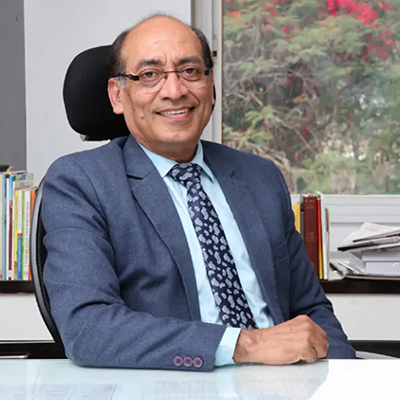
Promoting India as a global education hub and navigating the mobility of students and faculty | Prof. Dr. Dilip Kumar Patnaik | Vice Chancellor | Medicaps University
 Worldwide, the higher education system experiences rapid changes which create a critical period for India to establish itself as an international educational center. India has become an educational destination because of its vast youth demographic and its developing digital networks and its commitment to educational excellence through innovative methods.
The complete achievement of this vision needs dedicated efforts on two interrelated areas which involve enhancing India’s international academic reputation and managing cross-border student and faculty movement.
India’s Opportunity in the Global Education Ecosystem
Higher education worldwide has begun to move away from its traditional degree-based systems toward new educational frameworks which prioritize skills development and international learning experiences. Today, educational relevance gives prominence to international mobility, and India is in a great position to compete due to its vast size, diversity, and resources. The rising number of universities in India, including those situated in Tier-II cities, now provide their students with multidisciplinary study options which combine academic disciplines with practical work experiences and modern educational technologies.
The distribution of high-quality educational opportunities throughout India establishes the country as a trustworthy educational hub which students worldwide can access. All nations must establish ongoing educational quality standards and develop international academic programs and strengthen their research capabilities and establish significant international ties to improve their global competitiveness.
Student Mobility: From Outbound to Two-Way Exchange
Indian students have pursued education abroad for more than 40 years because they want to experience different cultures while participating in higher research programs and obtaining international academic qualifications. The upcoming stage of outbound mobility needs to establish systems which enable India to attract foreign students while providing domestic students international learning opportunities without requiring them to study abroad.
Indian educational institutions provide students with international experiences through short-term exchange programs and dual-degree pathways and joint certifications and their international faculty programs and global immersion modules. The educational system provides students with access to international learning opportunities through financial barriers that social systems use to present obstacles for students from various backgrounds.
International students discover India as an attractive study destination because the country provides high-quality educational programs at affordable prices together with its fast-growing innovation ecosystem and access to one of the world’s fastest-expanding economies and its diverse cultural learning environments. The university needs to develop student support services and improve its international campus facilities together with better programs to reach out to global communities in order to achieve its goal of maintaining student enrollment from other countries.
Faculty Mobility and the Exchange of Ideas
Faculty mobility is essential for developing universities that operate on a worldwide scale. The exchange of educators and researchers enables cross-pollination of ideas, which leads to pedagogical innovation and collaborative research. Visiting professorships, joint research initiatives, global fellowships, and industry-academia collaborations enrich both institutions and learners.
The ability to attract international faculty members helps Indian universities improve their academic standards which leads to increased research output. The institution gains global recognition through its international teaching opportunities which enable Indian faculty members to conduct research and establish international collaborations. The system requires three elements which include a flexible regulatory framework and the ability to acknowledge international expertise and the presence of institutional research partnership support.
The Role of Technology and Digital Collaboration
The educational system has become more accessible because technological advancements have decreased the impact of geographical limitations. The world can now participate in educational work through virtual classrooms and research platforms and online global modules and hybrid teaching systems which eliminate the need for physical presence. Universities use digital tools to create worldwide access to their educational programs when they combine these tools with on-campus experiential learning. The combined method provides equality of access to learning materials while preserving both educational content and student participation.
Building Institutions with Global Mindsets
The development of India as a worldwide educational center requires institutions to establish educational facilities which incorporate Indian traditions while meeting international standards. Universities need to allocate resources for programs that focus on effective student outcomes through research-based education and development of ethical leaders who understand current industry needs.
Students must acquire cultural awareness skills and flexible thinking abilities and effective communication skills and interdisciplinary problem-solving abilities to succeed in global work environments. Global mobility should provide benefits for employment opportunities but also educate individuals about their responsibilities and broaden their understanding of the world.
Looking Ahead
India has a goal to become a worldwide educational center which becomes operational in the present time. Indian universities can achieve worldwide recognition as educational and research centers through their development of international partnerships and their implementation of technology-based learning methods which enable student and faculty mobility.
The future of higher education will develop in three directions which include collaborative efforts and open systems and relevant educational programs. Our educational institutions must create learning environments which help students become ready for international careers and develop their abilities to lead on a global scale.