


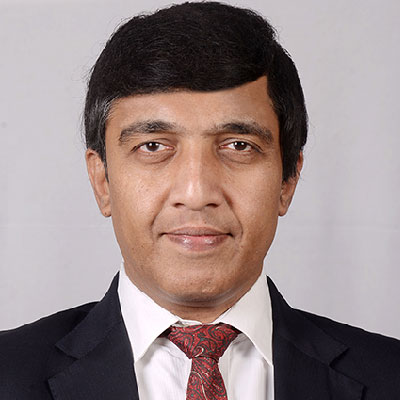
The New Rules of Leadership in a Multi-Generational Workplace | Arun Leslie George | President & CHRO | Coromandel International
 For the first time in workplace history, four generations Baby Boomers, Generation X, Millennials, and Generation Z are working alongside each other within the same organisations, teams, and leadership structures. Each generation has been shaped by different economic realities, technological environments, and workplace experiences, bringing distinct expectations around communication, career growth, flexibility, and leadership itself.
What earlier existed as a people challenge has now become a leadership transformation. The common perception of leadership is one based on hierarchy, predictability, and standardization. After all, experience flowed linearly and authority was related to tenure. But the expectations of the modern workforce are very different. More than ever before, employees are looking for approachable leaders, who are adaptable, emotionally intelligent and able to build environments where diversity and difference brings solutions.
In sectors where traditional operating models are now intersecting with digitally native talent pools, this transition is becoming even more visible. Leadership today is no longer defined only by operational execution or strategic direction. It is equally about creating trust, alignment, and clarity across a workforce with very different lived experiences and expectations. This shift is already visible globally. Deloitte’s 2026 Gen Z and Millennial Survey highlights how younger professionals are evaluating career growth through a broader lens that includes flexibility, meaningful work, continuous learning, and well-being alongside leadership aspirations. Rather than rejecting ambition, many professionals today are redefining what growth and success look like.
Leadership is increasingly associated not only with authority or designation, but also with impact, collaboration, authenticity, and the ability to create value while maintaining purpose and balance. For organisations, this shift is no longer theoretical. It is already influencing engagement, retention, leadership pipelines, and workplace culture across sectors.
Beyond Generational Labels
The misconception that happens is stereotyping generations. Youngsters are impatient and so need feedback. But is it really generations that drive workplace conflict? Generally not. Instead, it is different values and expectations about organizational recognition, autonomy, flexibility, career progression and communication that are at the root of disagreements. The key challenge for leaders in today’s world isn’t to manage generations, it’s to manage people.
Recognising this, leadership teams are at last beginning to see beyond generic stereotypes and recognise and accommodate the things that really matter to people, regardless of age or generation – respect, growth and development, meaningful work, psychological safety and feeling valued. What is different is the context in which those things are important and how individuals express them.
Just as our lives are becoming more flexible and agile, so too can how we work, learn and develop. Some may still rely on traditional annual reviews, but many of us need real-time interactions and feedback loops – especially those of us who have grown up in a digital age. And while some may want to simply find a job that doesn’t feel like work, others will want to learn as they go, and still more will want more choice and autonomy in their work, as well as greater opportunities to be engaged with it. The best leaders understand that they must manage to the strengths of employees of all ages. CHROs that manage all employees with exceptional communication skills and an inclusive approach will get the most out of all.
They should aim at a culture of acceptance and respect for the age diversity within their teams. For instance, by developing a strong vision and values and creating an environment for open dialogue, they can transform their workforces into a connected organisation by connecting their people,” adds SHRM’s research publication. This requires leaders to become significantly more communication-agile. The strongest leaders today are not those who apply one management style uniformly. They are the ones who can adapt their approach while remaining authentic, consistent, and credible across teams.
Leadership Beyond Hierarchy
One of the biggest shifts organisations are experiencing today is the growing importance of distinctly human leadership capabilities in an increasingly technology-driven workplace.
The World Economic Forum’s Future of Jobs Report 2025 highlighted a sharp rise in employer demand for leadership, social influence, resilience, and collaboration skills. Similarly, research from McKinsey & Company and SHRM continues to emphasise the growing importance of emotional intelligence, empathy, communication, and adaptability in leadership roles.
As technology takes over more process-driven tasks, the differentiator for organisations will increasingly lie in how effectively leaders can build trust, navigate uncertainty, and create human connection. This becomes particularly important in a multi-generational workforce where differing perspectives can either become a source of friction or a powerful driver of innovation.
In large and diverse organisations, leadership today often involves balancing continuity with change preserving institutional wisdom while creating space for newer perspectives to shape the future. Younger professionals often bring fresh perspectives around digital adoption, transparency, and collaboration. At the same time, experienced professionals contribute strategic judgement, institutional knowledge, resilience, and contextual business understanding developed over years of navigating business cycles and organisational change. The organisations that will succeed are those capable of bringing these strengths together rather than allowing generational silos to emerge.
This is one reason reverse mentoring is gaining momentum globally. Increasingly, organisations are encouraging two-way learning models where younger employees help senior leaders understand evolving technologies and workplace behaviours, while experienced leaders provide strategic guidance and long-term perspective.
At the same time, professionals across industries are also re-evaluating traditional leadership pathways. Many employees today seek opportunities to create impact, innovate, and collaborate while also maintaining flexibility and balance in how they work. This creates an important opportunity for organisations to rethink how leadership roles are designed and how future leaders are nurtured. Leadership is becoming less about hierarchy and more about influence, enablement, coaching, and alignment.
Leadership in the Age of AI
Technology and AI are accelerating workplace transformation faster than most organisations anticipated. Digital transformation has altered not only how employees work, but also how leadership credibility itself is perceived. Authority today is increasingly earned through openness, adaptability, competence, and trustworthiness rather than tenure alone.
Employees increasingly expect organisations to invest in continuous upskilling, career mobility, and learning opportunities. At the same time, they continue to look to leaders for clarity, empathy, and reassurance during periods of uncertainty and change.
Leaders today are also navigating a workplace where visibility, responsiveness, and communication happen in real time. In hybrid and digitally connected environments, leadership presence is no longer defined by physical proximity. It is increasingly shaped by accessibility, transparency, and the ability to maintain connection across distributed teams. This shift requires leaders to balance technological advancement with human engagement. While digital tools may improve efficiency and productivity, employees still look to leadership for trust, direction, and stability during periods of rapid change. Organisations that fail to balance both may struggle with disengagement despite technological progress.
What Future-Ready Leadership Looks Like
The future workplace will not be shaped by one dominant generation. It will be shaped by the ability of organisations to create collaboration across generations. Leaders who succeed in this environment will not necessarily be those with the loudest voices or the most authority. They will be the ones capable of building trust across age groups, encouraging diverse perspectives, and creating shared purpose amid evolving workforce expectations.
The organisations most prepared for the future are likely to be those that view generational diversity not as a challenge to manage, but as a strategic advantage to unlock. Experience and fresh thinking do not compete with each other, they strengthen each other when leadership creates the right culture.
Ultimately, the new rules of leadership are clear. Employees no longer expect leaders to simply drive outcomes. They expect leaders to create workplaces where people feel heard, respected, empowered, and prepared for the future. And in a multi-generational workplace, that ability may become the defining leadership advantage of the next decade.