

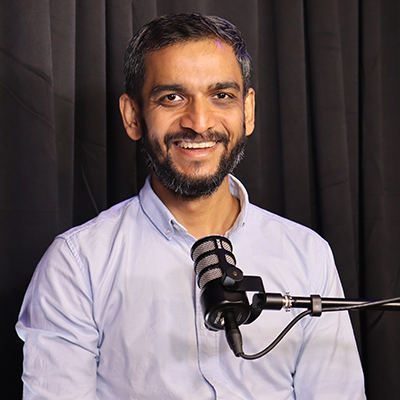
Top Behavioural Traits in Freshers that Recruiters Look for in 2025 | Naveen Tiwari | Co-Founder | Scrabble
 Hiring for entry-level roles is undergoing a quiet revolution in recent times. With AI-led automation revolutionising the world of business, access to key skills has become more readily available. And thus, recruiters are looking for more behavioural skills. That is not to say that domain knowledge, technical expertise, aptitude, etc., are no longer important.
However, in a parity of skills and knowledge, as is often the case amongst freshers, recruiters are turning to behavioural aspects as the key differentiators.
To put it simply, recruiters are no longer hiring for the job description alone. Instead, they are looking for an overall candidature that demonstrates the capacity to learn, transform, and evolve to take on leadership challenges and responsibilities in due course. Thus, as freshers prepare to join the job market soon, here’s highlighting key behavioural aspects they should work on to gain an edge in their mediations with top recruiters across the globe.
Top Predicator: Agility & Curiosity to Learn
Take a look around and you will see that today’s jobs are evolving more rapidly than ever. Recruiters are looking for talent who can stay abreast of the trend. In fact, recruiters favour candidates who demonstrate future-readiness and can learn and evolve before the job changes.
Freshers should demonstrate their upskilling and potential. Fascinate the recruiters with stories of acquiring a skill in a short time and solving a critical problem, in your college, as part of internships, technical training certifications, etc. It would also be a good idea to have a short portfolio ready. Recruiters to respond well to GitHub & Notion pages, or any other micro credentials that can validate curiosity & quick-learning.
Ability to Pivot in a Dynamic Market
In several of its reports on the future of jobs, the World Economic Forum lists leadership and social influence, analytical thinking and adaptability as some of the foremost skills, and recruiters, rightly so, are following suit. More often than not, we have seen freshers holding on to the concrete structures that were present in their academic lives. But in the real world, roles morph on the go, and top talent need to demonstrate their cognitive flexibility to win the trust of top recruiters.
Demonstrate your ability to change course on demand, handle ambiguous briefs with clarity and confidence, or solve problems that were once out of your comfort zone. Regale the recruiters with such tales, and you are more likely to walk out with an offer letter in your hand.
The Human Factor: Communication & Collaboration
Let’s put the tech vs. people’s skill debate to rest, once and for all. Even technical knowledge exists in a world and systems built and managed by real people. Thus, people’s skills are never going out of the picture. Research by Deloitte on “closing the experience gap” affirms the same, stating that skills relating to teamwork, communication, and cross-functional collaborations directly enhance the value of technical talent, and thus the hiring outcomes.
Demonstrate clear communication in the hiring rounds. Freshers may also use the STAR (Situation-Task-Action-Result) in their interview discussions and include examples of when they worked across teams and achieved a superior outcome than what was otherwise possible.
The Ultimate Showdown: Ownership & Emotional Resilience
Taking ownership of the outcomes, more than just the effort or the number of tasks executed, will invariably be a differentiating factor for freshers. Recruiters prefer candidates who approach tasks as micro-products that they can own: clearly define the problem, come up with a plan of action, execute it, integrate learnings, and repeat.
Integrating the learning is the critical factor in this step. Because this requires emotional resilience, the ability to recover from setbacks. Recruiters prefer candidates who can be candid about certain mistakes and focus on what they learned from the same. Bonus points for integrating those very learnings in accomplishing another project.
In a nutshell, this world belongs to demonstrated abilities, skills and capabilities, over degrees and credentials. In each of your interactions, recruiters are evaluating if this candidate can grow to be a leader of tomorrow. And behavioural aspects of your personality are the bedrock for this enquiry.